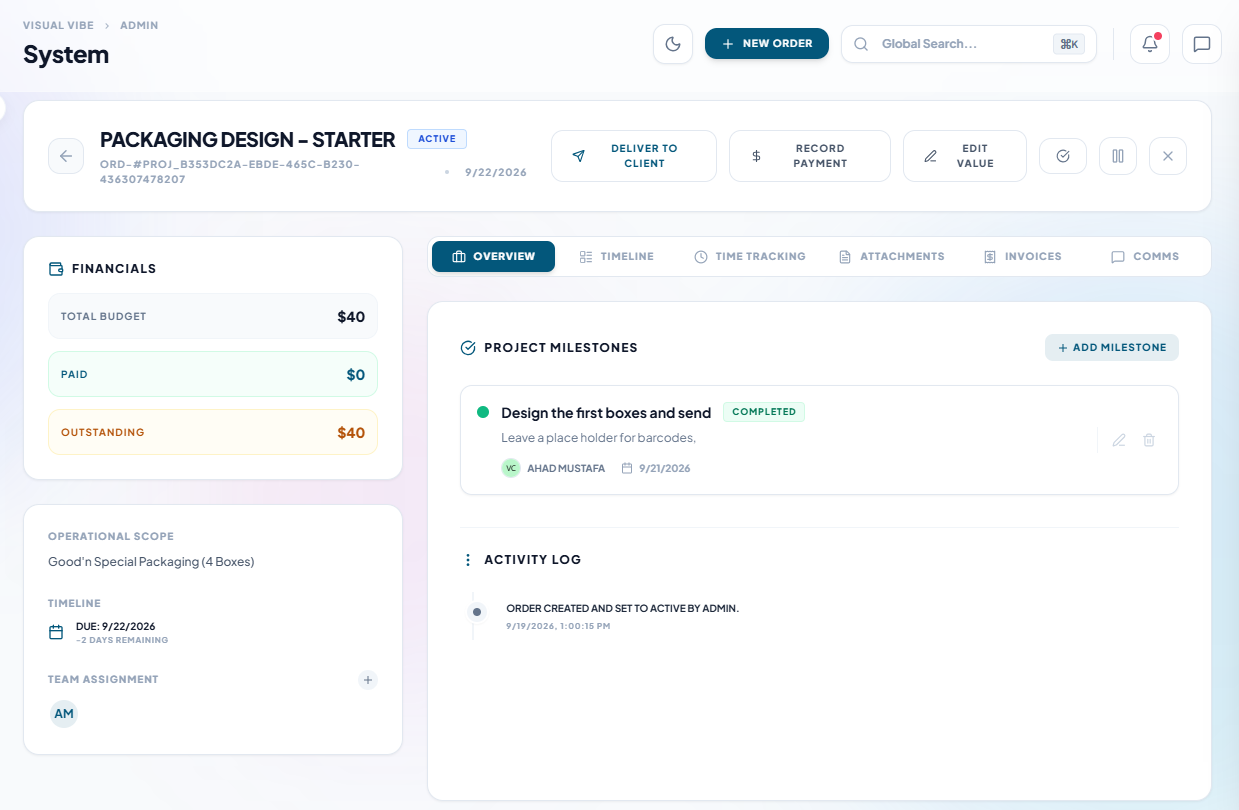
An agency workflow is the path a client request follows from the first brief to final delivery and payment. When that path exists only in people’s heads, work gets stuck between sales, project management, specialists, clients and finance. Deadlines slip even while everyone appears busy.
A useful workflow makes status, ownership and the next decision visible. It also connects delivery to money, because a project is not operationally complete while approval, invoicing or payment remains unresolved.
Map the real workflow before changing tools
Choose one common service and trace a recent project. Record how the request arrived, who qualified it, where the brief lived, how work was assigned, how the client reviewed it, when the invoice was issued and how payment was verified.
Mark every handoff where information was copied, requested again or lost. These are the points your agency project workflow must clarify first. New software cannot repair an undefined handoff by itself.
Stage 1: Intake and qualification
Capture the client, desired outcome, service, scope, budget, due date and decision maker in a consistent form. Decide whether the request fits your services, capacity and minimum commercial terms before promising a start date.
Qualified work should become an order or project record. Rejected or postponed opportunities should remain separate from active delivery so forecasts do not contain work the agency has not accepted.
Stage 2: Scope and project setup
Translate the agreement into deliverables, milestones, dates, project value, currency, included revisions and required client inputs. Assign one accountable owner. The founder may be that owner when they are delivering the work themselves.
Use the client onboarding checklist to collect contacts, assets and approval rules before production begins.
Stage 3: Production and internal review
Break work into meaningful milestones instead of hundreds of tiny tasks. Every milestone needs a result, owner and due date. Specialists should see the brief, relevant files and acceptance criteria without gaining access to private financial or client information they do not need.
Add an internal review before presenting important work to the client. The reviewer should check the brief, quality, completeness and presentation. This prevents the client review stage from becoming basic quality control.
Stage 4: Client review and approval
Send one clear review request that states what changed, what the client should evaluate and when feedback is due. Keep the deliverable, comments and approval decision together in a client portal.
Use visible states such as ready for review, changes requested and approved. An email saying “looks good” can be easy to lose; an approval record attached to the milestone protects both sides.
Stage 5: Revisions and scope control
Compare every request with the agreed deliverable and revision allowance. Corrections and refinements move through the normal cycle. New deliverables, changed objectives or extra revision rounds require a scope decision.
Record who requested the change, the additional value, the new date and the approval. Quietly absorbing extra work makes profitability data misleading and trains clients to treat scope as optional.
Stage 6: Delivery and handover
Confirm final approval, prepare the correct files, transfer agreed access and document any ongoing responsibility. Distinguish final deliverables from working files. Ask the client to confirm receipt before archiving the project.
For recurring services, delivery may close one cycle and create the next. Keep the reporting period, approved output and invoice linked so recurring work remains auditable.
Stage 7: Invoice, payment and closeout
Issue invoices according to the agreement rather than waiting for someone to remember. Show the invoice amount, currency, due date, payment method and verified payment records. Reconcile the remaining balance before marking the project financially complete.
Record project expenses and talent payouts separately. This lets the agency compare client value with direct delivery costs and understand the real margin.
Use workflow states that trigger action
- Intake: information or qualification is incomplete.
- Ready: scope, owner and inputs are confirmed.
- In progress: an assigned person is producing the next milestone.
- Client review: a dated decision is required from the client.
- Revision: approved feedback is being applied.
- Delivered: final output has been handed over.
- Completed: delivery and financial records are reconciled.
Measure the workflow weekly
Review overdue milestones, work without an owner, client decisions waiting more than agreed, projects with repeated revisions, uninvoiced delivered work and overdue balances. Each exception needs one owner and next action.
Document workflow rules in plain language
Write a short definition for each state, the information required to enter it and the person responsible for moving work forward. For example, “client review” should require a named deliverable, a working review link, an approval question and a response date.
Keep exceptions visible instead of hiding them inside a generic “in progress” status. Waiting for content, blocked by access and awaiting client approval require different action even though no production is happening.
Automate reminders without removing ownership
Notifications can remind a client that feedback is due or alert an owner that a milestone is late. They should point to one specific action and the correct record. Repeated generic alerts teach people to ignore the system.
Automation should support the accountable owner, not replace them. A person still decides whether to call the client, move a deadline, change an assignment or approve additional scope.
Roll out the workflow in 30 days
During week one, map one service and agree on states. In week two, run all new work through the process. In week three, add client approvals and finance records. In week four, review exceptions, remove unused fields and document the final rules. Expand to another service only after the first flow works.
Agencore connects orders, projects, assignments, milestones, client approvals, invoices and payment records in one agency management workspace. Start with one real project, remove duplicate updates, and make every stage answer the same question: what must happen next?